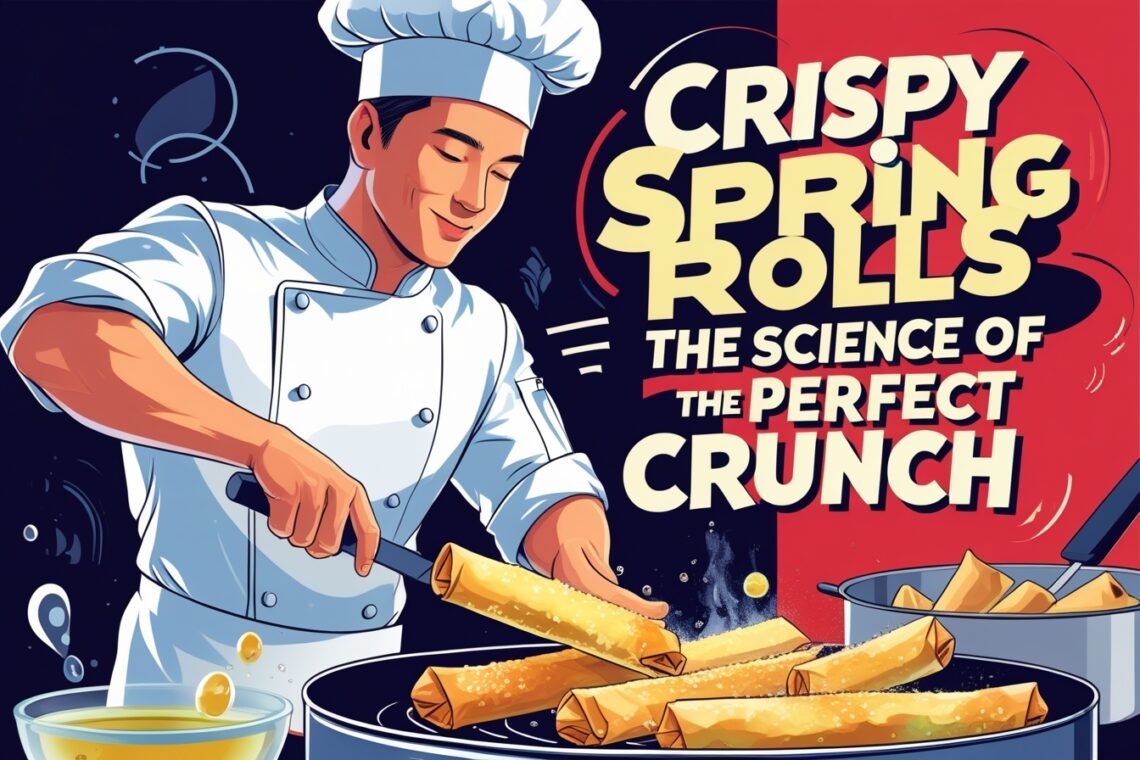
What transforms a simple wrapper and filling into a symphony of shattering textures that makes your taste buds dance? The answer lies in mastering crispy spring rolls and understanding the science of the perfect crunch, a culinary alchemy that turns ordinary ingredients into extraordinary sensory experiences.
The Physics of Crunch:
Crispy spring rolls represent one of cooking’s most fascinating scientific phenomena. The moment your teeth break through that golden exterior, you’re experiencing a complex interplay of physics, chemistry, and culinary artistry that creates the perfect crunch.
The science begins with understanding how heat transforms moisture into steam, creating microscopic air pockets that give crispy spring rolls their signature texture. When oil reaches the optimal temperature, it rapidly dehydrates the wrapper’s surface while maintaining the interior’s moisture content, creating the textural contrast that defines exceptional spring rolls.
The science of the perfect crunch involves controlling three critical variables: temperature, moisture content, and timing. Each variable affects the final texture differently, and mastering their interaction separates amateur cooks from spring roll artisans.
The Foundation of Crunch Excellence:
Molecular Structure and Texture Formation
The wrapper is where the science of the perfect crunch truly begins. Spring roll wrappers contain starches that undergo gelatinization when heated, creating a network of crystalline structures that produce the characteristic snap when bitten.
Understanding wrapper composition helps explain why some crispy spring rolls achieve superior crunch while others fall flat. Wheat-based wrappers contain gluten proteins that create elasticity, while rice-based wrappers offer different textural properties due to their unique starch composition.
Temperature’s Role in Wrapper Transformation
Crispy spring rolls require precise temperature control to achieve optimal wrapper transformation. At temperatures below 350°F, wrappers absorb oil without achieving proper crispness. Above 375°F, they burn before the interior cooks properly.
The ideal temperature range for the perfect crunch falls between 350-370°F, where the wrapper’s moisture evaporates rapidly enough to create air pockets while preventing oil absorption that leads to greasiness.
Wrapper Preparation Techniques
Professional techniques for crispy spring rolls include specific preparation methods that enhance crunch potential:
- Double-wrapping creates additional layers for enhanced textural complexity
- Egg wash application provides a protein coating that browns beautifully
- Cornstarch dusting absorbs excess moisture and promotes crispiness
- Proper sealing prevents oil penetration that compromises texture
The Chemistry of Filling:
Water Activity and Crunch Preservation
The science of the perfect crunch extends beyond the wrapper to the filling composition. Excess moisture in fillings creates steam during cooking, which can soften the wrapper from the inside and destroy the desired textural contrast.
Understanding water activity helps explain why certain vegetables work better in crispy spring rolls than others. Ingredients with high water content require pre-treatment to remove excess moisture before wrapping.
Ingredient Selection for Optimal Texture
Creating crispy spring rolls with lasting crunch requires strategic ingredient selection. Vegetables with naturally lower water content maintain their texture better during cooking and storage.
Proteins require specific preparation to minimize moisture release during cooking. Pre-cooking and draining proteins removes excess liquids that could compromise the perfect crunch.
Pre-Treatment Techniques for Moisture Control
Professional methods for moisture management in crispy spring rolls include:
- Salt-drawing removes excess water from vegetables
- Blanching and shocking partially cooks vegetables while preserving texture
- Stir-frying evaporates moisture while developing flavors
- Marinating with moisture-absorbing ingredients like cornstarch or potato starch
The Cooking Science Revolution:
Oil Temperature and Heat Distribution:
The science of the perfect crunch depends heavily on understanding heat transfer mechanisms. When crispy spring rolls enter properly heated oil, several simultaneous processes create the desired texture.
The wrapper’s surface temperature rises rapidly, causing moisture to flash into steam. This steam escapes through microscopic pores, creating the air pockets that produce crunch. Meanwhile, the oil’s heat penetrates inward, cooking the filling without overcooking the wrapper.
Convection Patterns and Even Cooking:
Understanding convection patterns helps achieve consistently crispy spring rolls. Oil circulation ensures even heat distribution, preventing hot spots that cause uneven browning or burning.
Proper spacing between rolls allows oil to circulate freely, ensuring each roll receives consistent heat exposure. Overcrowding creates temperature drops and uneven cooking that compromises the perfect crunch.
Timing and Temperature Monitoring:
Achieving crispy spring rolls requires precise timing based on scientific principles. The initial high-temperature phase creates the crust, while the subsequent cooking period allows interior heating without overcooking the exterior.
Professional cooks monitor oil temperature continuously, adjusting heat sources to maintain optimal conditions throughout the cooking process.
Advanced Techniques for Crunch Optimization:
Multi-Stage Cooking Methods:
The science of the perfect crunch sometimes requires multi-stage cooking approaches. Initial low-temperature cooking ensures thorough interior heating, while final high-temperature finishing creates the desired exterior texture.
This technique, borrowed from professional kitchens, allows for better control over both texture and flavor development in crispy spring rolls.
Pressure and Steam Management:
Understanding pressure dynamics helps optimize the crispy spring rolls texture. Properly sealed rolls build internal pressure during cooking, which helps maintain filling integrity while promoting even heat distribution.
Steam venting techniques prevent pressure buildup that could cause roll rupture while maintaining the steam necessary for proper texture development.
Coating and Breading Innovations:
Modern techniques for enhanced crispy spring rolls include specialized coatings that promote crunch formation:
- Tempura-style batters create additional textural layers
- Panko breadcrumb coatings provide extra crunch elements
- Seasoned flour dredging enhances browning and flavor
- Protein-based coatings create complex textural interactions
The Role of Ingredients in Texture Creation:
Starch Selection and Modification:
The science of the perfect crunch involves understanding how different starches behave during cooking. Potato starch creates different textural properties than cornstarch, while rice starch offers unique characteristics.
Modified starches, developed through food science research, provide enhanced crunch retention and oil absorption resistance in crispy spring rolls.
Protein Chemistry and Texture:
Proteins in crispy spring rolls undergo denaturation during cooking, creating textural changes that contribute to the overall eating experience. Understanding protein behavior helps predict how different fillings will affect the final texture.
Egg proteins, when used in wrappers or as binding agents, create additional textural complexity through their unique coagulation properties.
Fat Distribution and Mouthfeel:
The fat content in crispy spring rolls affects both texture and flavor release. Proper fat distribution creates lubrication that enhances the eating experience while maintaining structural integrity.
Understanding fat behavior during cooking helps optimize both texture and flavor development in crispy spring rolls.
Equipment and Tools for Crunch Mastery:
Thermometer Technology and Precision:
Achieving the perfect crunch requires precise temperature control that only accurate thermometers can provide. Digital instant-read thermometers offer the precision necessary for consistent results.
Infrared thermometers allow non-contact temperature monitoring, preventing oil temperature fluctuations that compromise crispy spring rolls quality.
Specialized Cooking Equipment:
Professional-grade equipment enhances crispy spring roll production:
- Deep fryers with precise temperature control maintain consistent oil temperature
- Wire basket systems ensure even oil circulation
- Drainage systems remove excess oil without compromising texture
- Warming equipment maintains serving temperature without degrading the crunch
Quality Control Tools:
Measuring tools for the science of the perfect crunch include:
- Penetrometers measure texture objectively
- Moisture meters assess ingredient water content
- pH meters monitor acidity levels that affect browning
- Texture analyzers provide scientific measurement of crunch characteristics
Storage and Reheating Science:
Humidity Control and Crunch Preservation:
Crispy spring rolls lose their texture when exposed to humidity, as moisture absorption softens the crispy exterior. Understanding humidity’s effects helps develop storage strategies that preserve the perfect crunch.
Controlled atmosphere storage, using desiccants or humidity control systems, extends the textural life of crispy spring rolls significantly.
Reheating Methods and Texture Restoration:
Scientific reheating methods can restore crunch to crispy spring rolls that have lost their textural appeal. Dry heat reheating, using ovens or air fryers, removes absorbed moisture while re-establishing the desired texture.
Understanding the science behind texture restoration helps home cooks achieve restaurant-quality results with leftover crispy spring rolls.
Packaging Technology for Texture Preservation:
Modern packaging materials help maintain the perfect crunch during storage and transport. Moisture-barrier packaging prevents humidity absorption, while breathable materials allow steam escape without compromising texture.
Cultural Variations and Scientific Principles:
Regional Techniques and Scientific Basis:
Different cultures have developed unique approaches to crispy spring rolls, each with scientific principles that explain their effectiveness. Vietnamese techniques emphasize rice paper preparation, while Chinese methods focus on wheat wrapper optimization.
Understanding the science behind regional variations helps home cooks adopt techniques that improve their crispy spring rolls regardless of their cultural background.
Traditional Methods and Modern Science:
Traditional crispy spring rolls techniques often align with modern scientific understanding, even when developed centuries ago. Analyzing these methods through the science of the perfect crunch reveals why they remain effective.
Innovation Through Scientific Understanding:
Modern innovations in crispy spring rolls production apply scientific principles to traditional techniques, creating improved results while respecting cultural authenticity.
Troubleshooting Common Crunch Failures:
Soggy Wrapper Syndrome:
When crispy spring rolls lose their crunch, specific scientific factors are usually responsible. Oil temperature too low, excess moisture in fillings, or improper sealing can all compromise the perfect crunch.
Understanding the science behind these failures helps cooks diagnose and correct problems systematically.
Uneven Browning and Texture:
Inconsistent results in crispy spring rolls often stem from temperature variations, uneven oil circulation, or improper roll construction. Scientific analysis of these factors provides solutions.
Oil Absorption and Greasiness:
Excessive oil absorption prevents the perfect crunch and creates an unpleasant mouthfeel. Understanding the science of oil-wrapper interaction helps prevent this common problem.
The Future of Crunch Science:
Emerging Technologies in Texture Creation:
Food science continues to advance our understanding of the science of the perfect crunch. New technologies promise even better control over texture development in crispy spring rolls.
Air frying technology, precision cooking methods, and advanced coating systems represent the future of crunch optimization.
Nutritional Enhancement Without Compromise:
Modern food science seeks to enhance the nutritional value of crispy spring rolls without sacrificing the perfect crunch. Fiber-enhanced wrappers, protein-fortified coatings, and reduced-oil cooking methods show promise.
Sustainability and Crunch Science:
Environmental considerations drive innovation in crispy spring rolls production. Sustainable ingredients, reduced energy cooking methods, and eco-friendly packaging all require scientific approaches to maintain texture quality.
Conclusion:
Mastering crispy spring rolls requires understanding the science of the perfect crunch, a fascinating intersection of physics, chemistry, and culinary artistry. By applying scientific principles to traditional techniques, home cooks can achieve professional-quality results that delight the senses and satisfy cravings for that perfect textural experience.
FAQs:
Q1: What oil temperature creates the perfect crunch in spring rolls?
A: The ideal temperature range is 350-370°F for optimal wrapper transformation and crunch development.
Q2: How can I prevent my spring roll filling from making the wrapper soggy?
A: Pre-cook vegetables to remove excess moisture and use salt-drawing techniques before wrapping.
Q3: Why do my spring rolls lose their crunch after cooling?
A: Humidity absorption softens the crispy exterior; store in low-humidity environments for best results.
Q4: Can I achieve perfect crunch without deep frying?
A: Air frying and high-temperature baking can create an excellent crunch with proper technique and oil application.
Q5: What’s the science behind double-wrapping for extra crunch?
A: Multiple layers create additional air pockets and structural complexity that enhance textural contrast.
Q6: How long can crispy spring rolls maintain their perfect crunch?
A: Under ideal storage conditions, properly made spring rolls retain optimal crunch for 2-4 hours after cooking.