
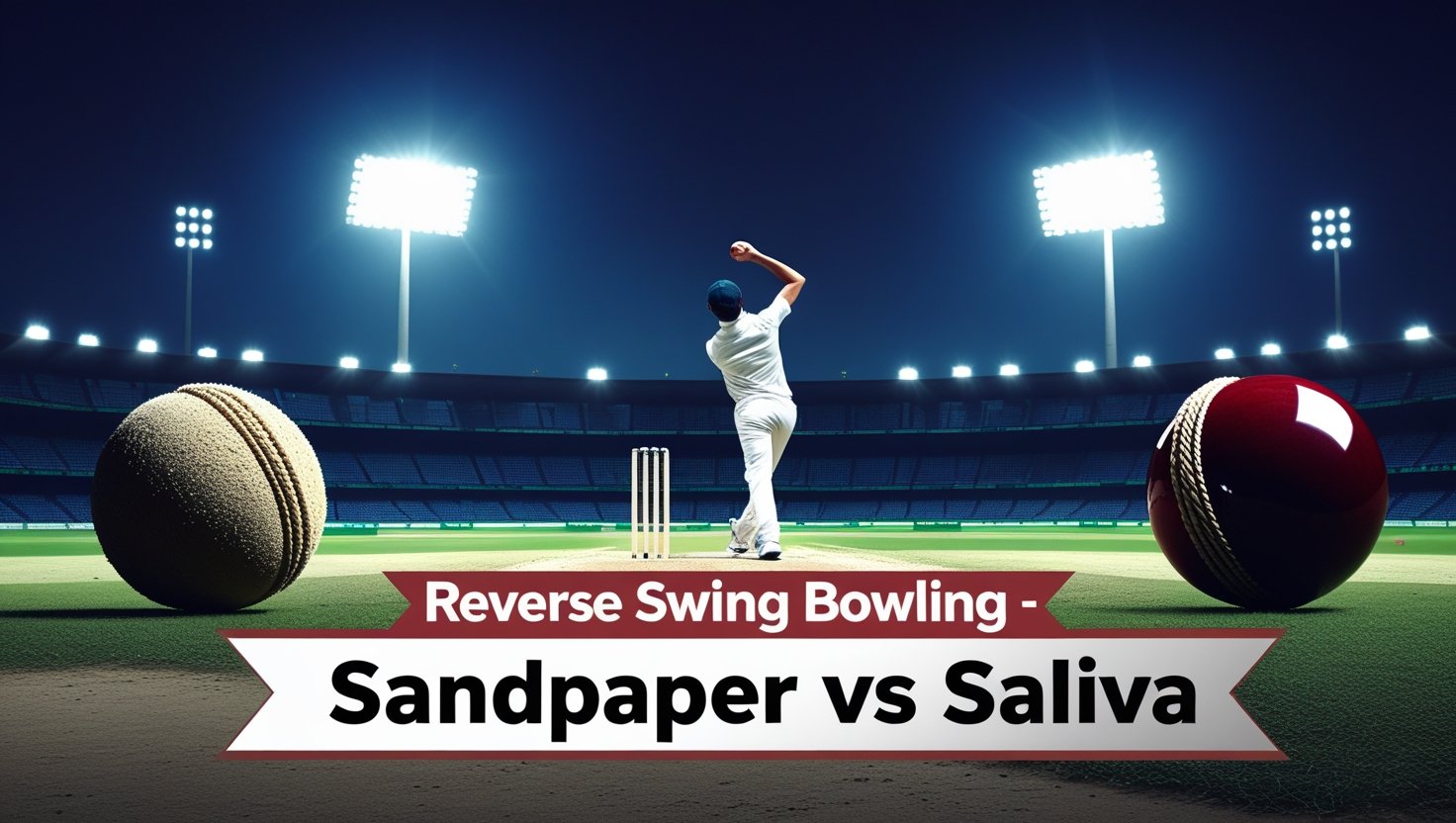
Imagine a cricket ball flying through the air, defying expectations with an unpredictable curve. Reverse Swing Bowling is that art form where a bowler can manipulate the ball’s flight by altering its surface. At the heart of this phenomenon lies an age-old debate: saliva versus sandpaper. Explore with us how natural techniques and illicit shortcuts have defined one of cricket’s most fascinating disciplines.
Defining the Reverse Swing Phenomenon:
Reverse swing is a sophisticated bowling technique that makes the cricket ball deviate in the opposite direction from conventional swing. It is most effective when the ball is older and one side is significantly smoother than the worn-out rough side. Unlike conventional swing, which relies on atmospheric conditions and a freshly polished ball, reverse swing takes advantage of the altered aerodynamics caused by the asymmetric surface.
Players and experts often credit reverse swing for its ability to baffle batsmen and change the course of a match in an instant. With its roots dating back to the early 1970s in subcontinent cricket, it has cemented its place as a crucial element in modern fast bowling. In essence, reverse swing is not just a physical phenomenon; it is a chess-like strategy that hinges on skill, timing, and a deep understanding of aerodynamics.
How Reverse Swing Works:
At its core, reverse swing is driven by the interplay between the ball’s seam, the condition of its surface, and the surrounding airflow. The cricket ball consists of two hemispheres: one smooth and shiny, and the other rough and worn. The difference in the state of these surfaces creates an asymmetry in airflow over the ball.
When a bowler delivers the ball, the smooth side encourages laminar airflow, while the rough side, with its turbulent boundary layer, disrupts air movement. This difference causes the ball to swing in the direction of the smooth surface, a reversal from conventional swing, which typically goes towards the rough side when the ball is new. Factors such as delivery speed, the angle of the seam, and environmental conditions further enhance this effect. Thus, mastering reverse swing is as much about understanding physics as it is about perfecting a bowling technique.
The Role of Saliva in Reverse Swing:
In the realm of cricket, the use of saliva to polish the ball has long been the norm, a natural substance that increases the ball’s shine. Players consciously polish one side of the ball using saliva (or sweat) to build up a contrast in surface conditions. The smooth, polished side maintains a sleek finish, while the opposite side accrues micro-abrasions and becomes rougher due to the natural wear and tear of the game.
This natural polishing helps maintain a controlled environment where the ball can later swing dramatically once it loses its initial conventional movement. Saliva, being readily available and controlled by the bowler’s natural routine, fits seamlessly into the laws of cricket. Its use is not only practical but also a tradition that has been handed down through generations, embodying the spirit of the game.
Controversial Tactics:
For every traditional approach, there is a darker parallel, using sandpaper to alter the ball’s surface. Unlike saliva, sandpaper is an artificial and illicit method that intentionally roughens one side of the ball at an accelerated pace. The idea behind this controversial tactic is to create an even starker contrast between the two sides, thereby enhancing the reverse swing effect.
However, this practice is strictly banned by the rules of cricket, as it involves an element of ball tampering. The use of abrasive materials like sandpaper not only violates the spirit of fair play but also compromises the integrity of the sport. Incidents involving sandpaper have often led to heated debates and severe penalties, highlighting the fine line between legal skill and unethical manipulation. The controversy underscores a critical aspect of cricket, where innovation must be balanced with respect for the game’s regulations and traditions.
Perfecting the Reverse Swing:
Achieving the ideal reverse swing is an art that requires precise technique and discipline. Here are some key points that bowlers consider:
- Grip and Seam Positioning: A bowler must hold the ball in a manner that maintains a consistent orientation of the seam. The subtle tweak in grip helps direct the swing towards the polished side and away from the rough side.
- Run-Up Consistency: The run-up should remain unchanged whether delivering a conventional or a reverse swing. Any deviation can alert the batsman to the impending change in trajectory.
- Polishing Routine: When employing natural methods, players focus on regularly polishing one side with saliva while allowing the opposite side to gradually deteriorate. Team members often assist by using parts of their clothing judiciously.
- Speed Control: The reverse swing effect is more pronounced at higher speeds. Therefore, maintaining bowling speed while ensuring the ball’s condition becomes crucial in executing the technique successfully.
- Mindful of the Laws: Bowlers must adhere to the strict rules regarding the use of substances on the ball. While saliva is acceptable, any deviation, such as using foreign abrasives like sandpaper, is not only unethical but also subject to severe disciplinary action.
By adhering to these dos and don’ts, bowlers refine their technique to exploit the subtle differences in airflow, thus maximizing the reverse swing effect while maintaining integrity on the field.
Historical Evolution and Legendary Bowlers:
Reverse swing has come a long way since its inception, largely due to the pioneering efforts of bowlers from the subcontinent. Legends like Wasim Akram, Waqar Younis, and later, James Anderson, brought this technique into the global spotlight. Their mastery over reverse swing turned games on their head and transformed fast bowling into an art form.
The early days of reverse swing involved a deep understanding of ball maintenance techniques, practices that were honed through trial, error, and on-field innovation. Over the years, as the cricket ball aged and the constant cycle of polishing and natural wear took its toll, the phenomenon of reverse swing became an indispensable weapon in the fast bowler’s arsenal. Today, it is a testament to how cricket techniques evolve, influenced by natural methods, rigorous practice, and sometimes, the lure of shortcuts that push the boundaries of conventional play.
How Reverse Swing Shapes the Game:
Reverse swing is not just a marvel of physics; it is a potent tactical weapon. When executed correctly, it adds an unexpected twist to the game, forcing batsmen to constantly adjust their timing and shot selection. The sudden deviation in the ball’s path can lead to edges that result in crucial dismissals.
The unpredictability of reverse swing creates significant psychological pressure on the batsman. They must constantly anticipate the ball’s behavior, balancing between conventional swing and its reversed counterpart. This level of uncertainty often forces errors, thereby offering bowlers an invaluable edge during high-pressure situations. In many ways, mastering reverse swing can turn the tide of a match, making it one of the most revered skills in fast bowling.
Balancing Ethics with Innovation:
The practice of achieving reverse swing is steeped in tradition but is not without its ethical challenges. The natural use of saliva is accepted as part of the game, yet its role has been scrutinized, especially in light of modern hygiene concerns and evolving regulations. On the other hand, the artificial speeding-up of the process through sandpaper represents a blatant breach of both rules and sportsmanship.
Cricket’s governing bodies have taken a hard stance against ball tampering, ensuring that any attempt to use forbidden substances or tools is met with stringent penalties. This ongoing debate reflects a larger discussion within the sport: how to balance the advancement of innovative techniques with the need to uphold the principles of fair play and respect for the game. As technology and analytics further influence cricket strategies, maintaining this balance will remain a key issue for players, coaches, and regulators alike.
The Future of Reverse Swing Bowling:
The evolution of reverse swing continues as bowlers and coaches study the science behind it with modern tools and data analytics. Future training methods may integrate advanced aerodynamics simulations and real-time feedback mechanisms, allowing players to fine-tune their delivery with unprecedented precision.
Moreover, as discussions about hygiene and ethical practices evolve, there might be clearer guidelines on how natural substances like saliva should be used during play. Simultaneously, the persistent lure of illicit shortcuts like sandpaper keeps the governing bodies vigilant, ensuring that the sport remains pure and competitive. The future of reverse swing lies in embracing science and innovation while respecting the storied traditions that have defined cricket for generations.
Conclusion:
Reverse Swing Bowling is a captivating blend of physics, skill, and strategy that has transformed the fast bowling landscape in cricket. The use of natural methods like saliva for ball polishing contrasts sharply with the controversial and illegal use of sandpaper. This sophisticated technique challenges batsmen with its unpredictability and demands precision from bowlers, making it both a tactical asset and a subject of ongoing debate. As cricket continues to evolve, the balance between innovation and ethical practice will keep the dialogue vibrant, a dialogue where every delivery carries the legacy of the game’s rich history.
FAQs:
1. What is reverse swing?
It is a bowling technique where the ball deviates towards the shiny side when older.
2. How does saliva aid reverse swing?
Saliva naturally polishes one side to create the required asymmetry.
3. Why is sandpaper banned in cricket?
Sandpaper artificially roughens the ball and violates the fair-play rules.
4. Can reverse swing be mastered with conventional training?
Yes, consistent grip, seam control, and natural polishing are key.
5. Who popularized reverse swing in cricket?
Legends like Wasim Akram and Waqar Younis revolutionized the technique.
6. What impact does reverse swing have on the game?
It adds unpredictability, pressuring batsmen and often leading to crucial wickets.